


The history of the Mill, between
heritage and the art of hospitality
A restaurant in an exceptional setting
S’attabler au Moulin, c’est bien plus que découvrir un restaurant au cadre exceptionnel en Seine-et-Marne.
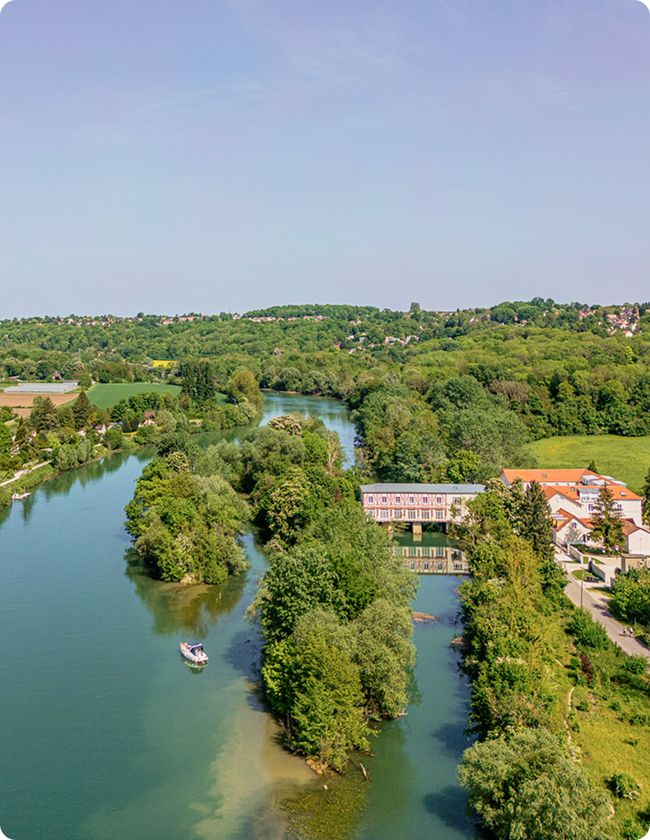
It is to enter a place steeped in history, set upon the Marne, where nature, architecture and gastronomy meet. Facing the water, between the river and verdant islands, Le Moulin invites you to experience a singular interlude: a luminous lunch, a dinner by the water’s edge, a cocktail suspended above the Marne or a shared moment in a rare setting.
Avant de devenir un restaurant bistronomique et un bar à cocktails, Le Moulin de Quincangrogne a connu plusieurs vies. Moulin à eau, site industriel, lieu de villégiature, source d’inspiration… Son histoire traverse les siècles et donne aujourd’hui toute son âme à cette adresse atypique du 77.
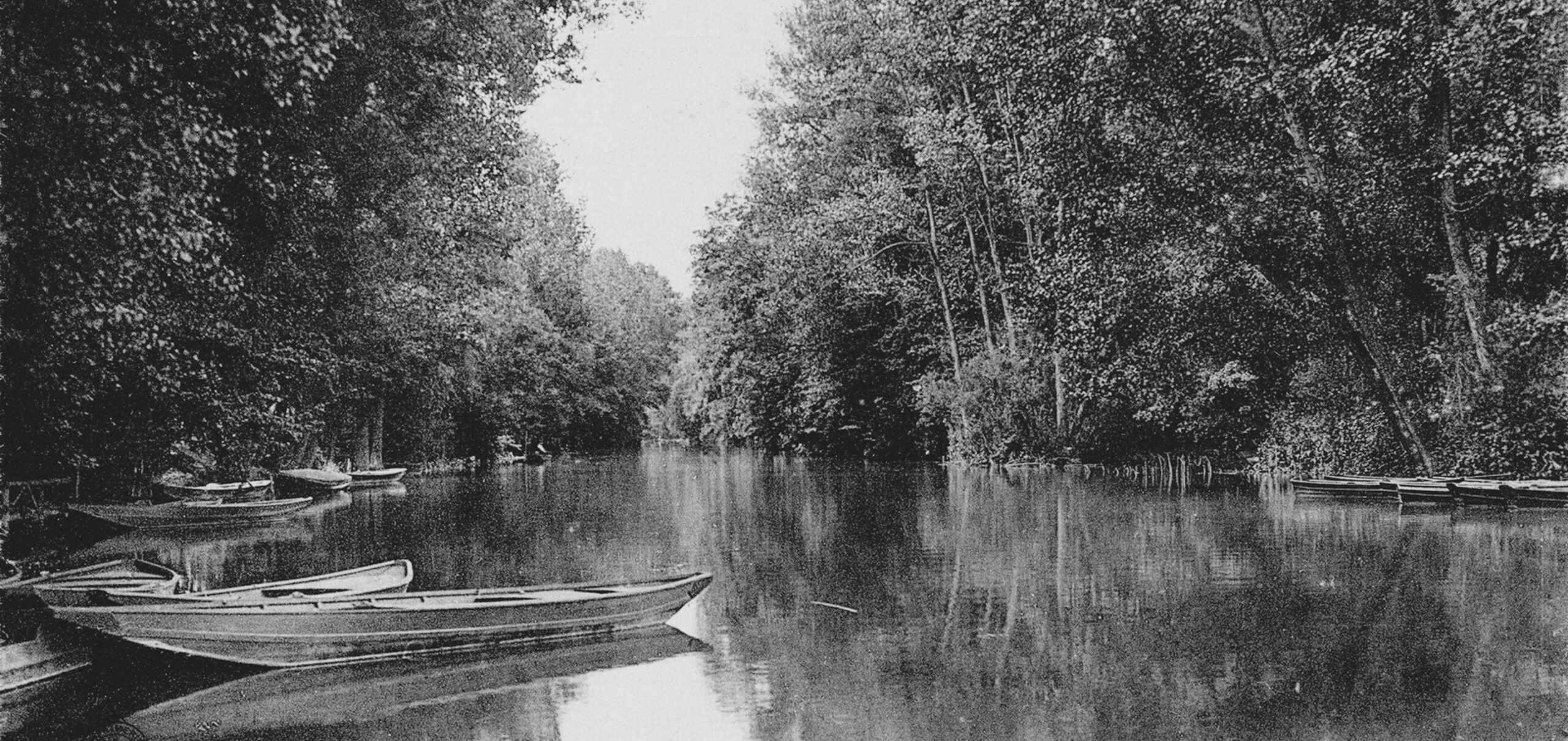
Un nom qui ne doit rien au hasard
Of its construction, only one certainty remains: its name. The Moulin de Quincangrogne takes its name from the old phrase “qui qu’en grogne”, an expression that reflected the owner’s determination to follow his own path, whatever others might think.
More than just a name, it tells the story of the Mill’s spirit. It evokes the independence, authenticity and character of a place that has spanned generations without compromising its identity. Even today, this history contributes to the singular charm of the estate and the atmosphere it exudes.
Located on the banks of the Marne, Le Moulin today perpetuates this legacy in a setting where heritage meets contemporary lifestyle. A unique place, deeply rooted in its landscape, which continues to write its history.
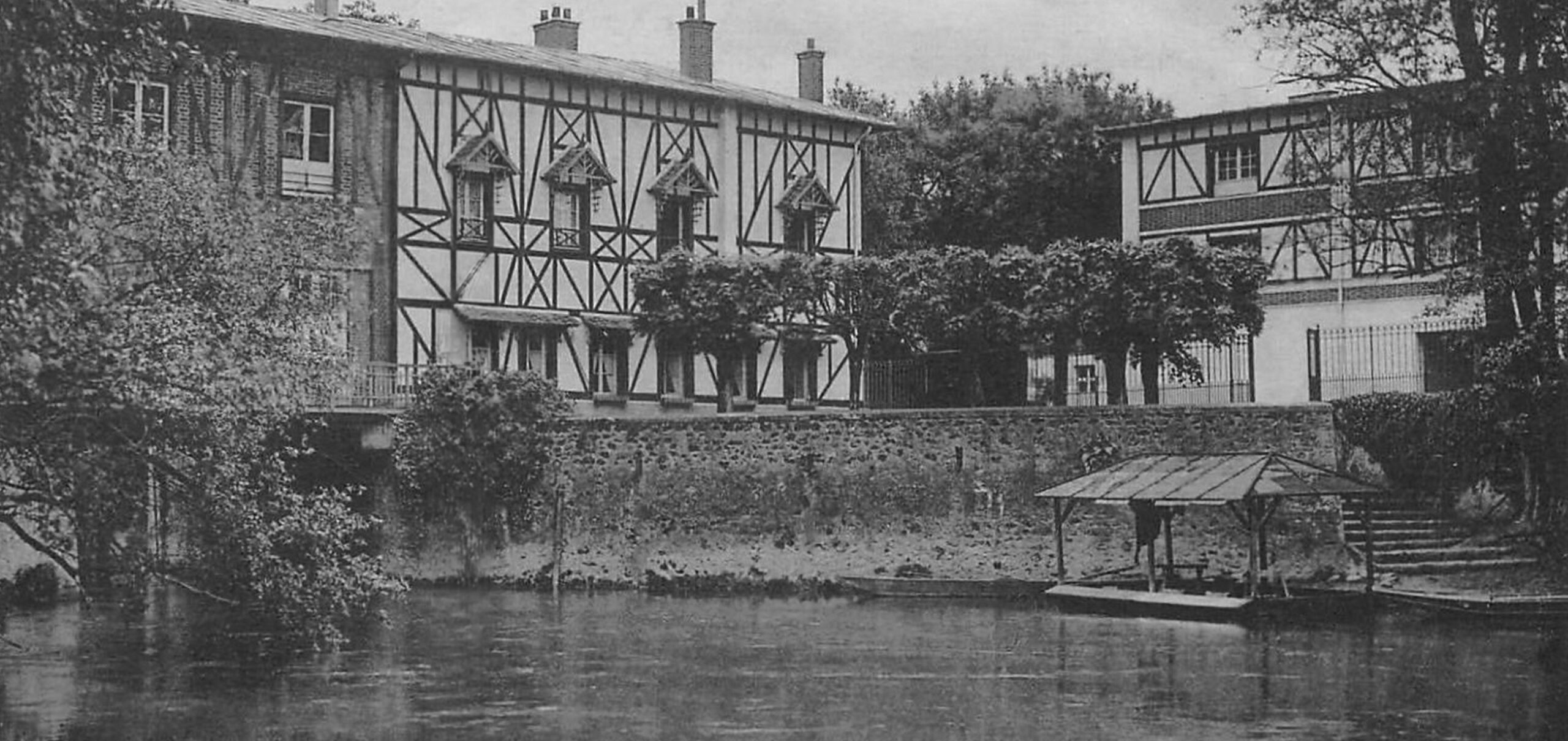
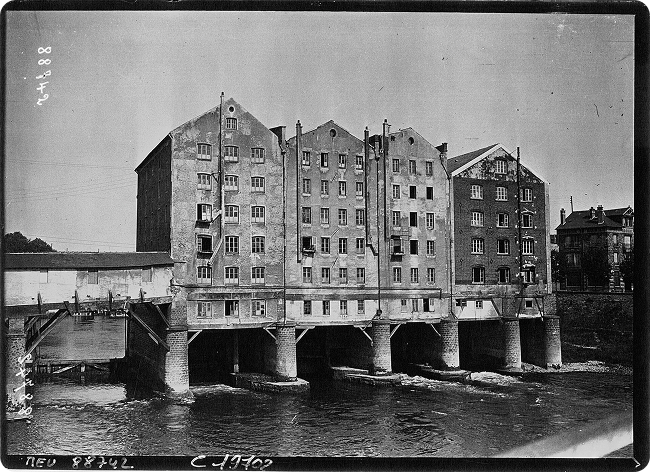
The mills of the Marne,
an ancestral tradition
The Moulin de Quincangrogne appears in writings as early as 1564, but its history is part of the much broader story of the mills of the Marne. As early as the 7th century, a first mill was operating near the Meaux market.
Between the 12th and 13th centuries, wheat mills multiplied throughout the valley: there was one every 4 km, including 11 for the town of Meaux alone. During the same period, 4 mills were established in Chessy, though it is not known if the one in Montévrain was among them.
After the Hundred Years’ War, many facilities disappeared, replaced by industrial mills: tan mills for leather tanning, fulling mills for the textile industry, and oil mills.
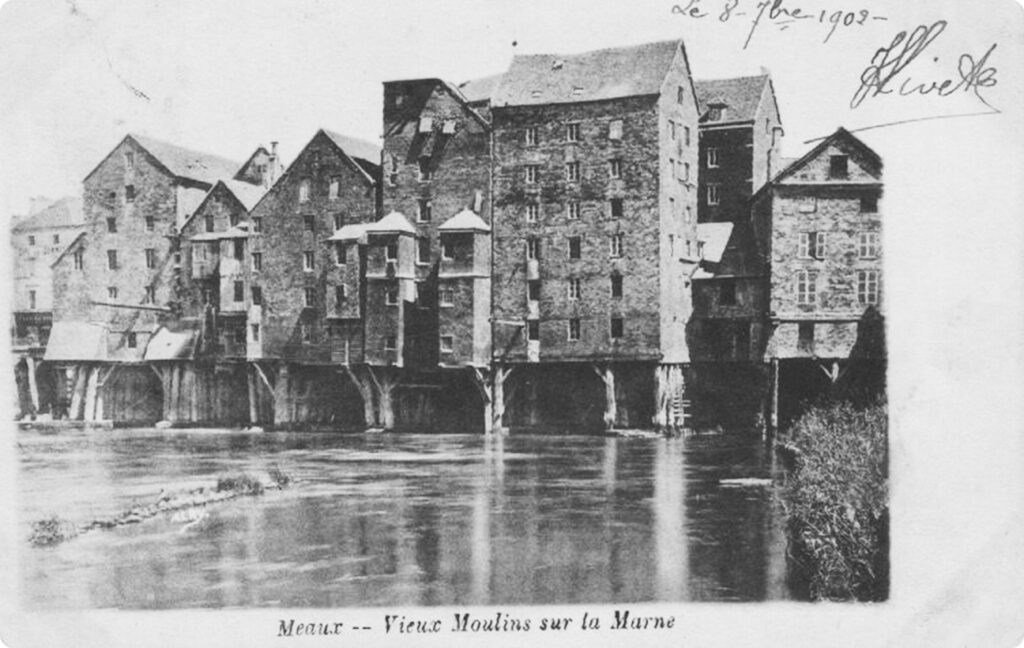
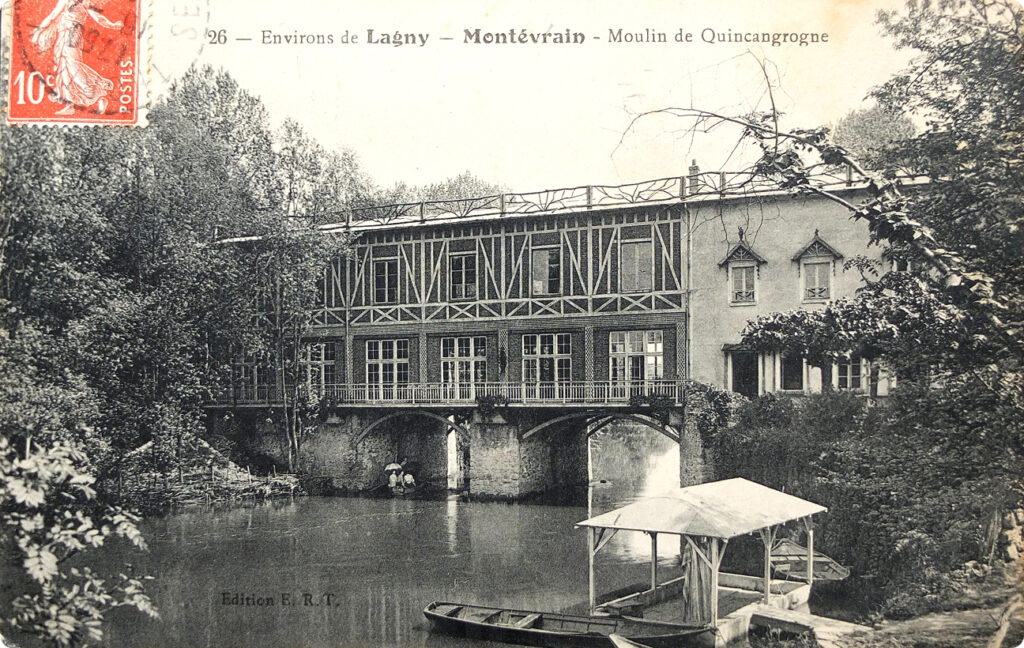
Around 1650, the wheat mills resumed their activity. In the 19th century, industrialisation transformed them into flour mills: rollers replaced millstones, and the entire process was henceforth carried out on-site.
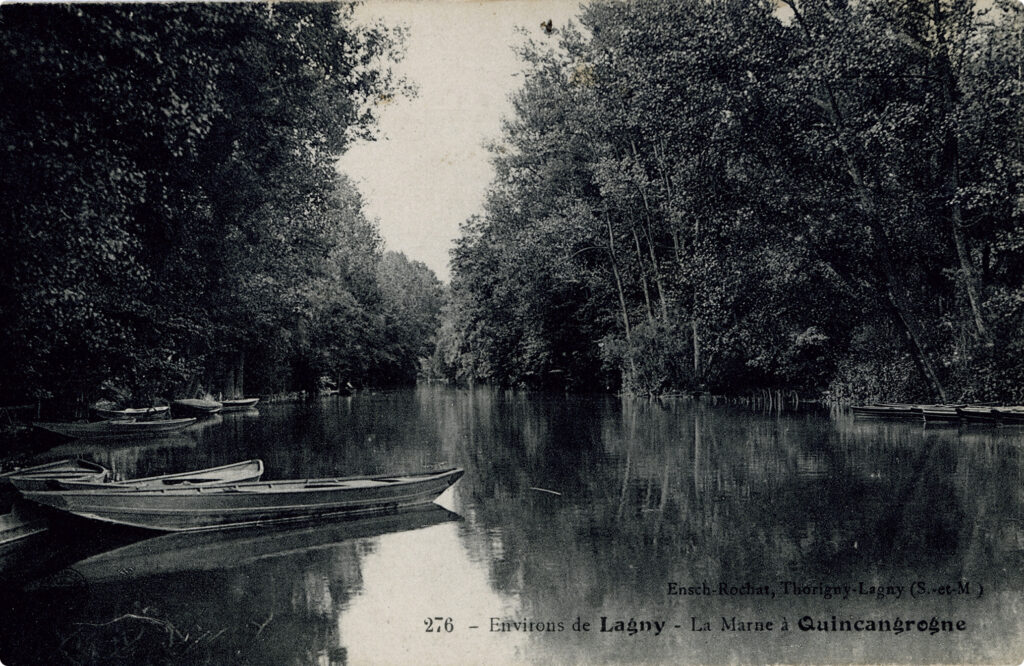
Between 1860 and 1870, the majority of these mills were destroyed to allow for improved navigation on a newly canalised Marne.
Les mille vies du Moulin de Quincangrogne
For centuries, the Moulin de Quincangrogne has spanned the eras and reinvented itself, from a watermill to a living space, all while preserving the memory of its history.
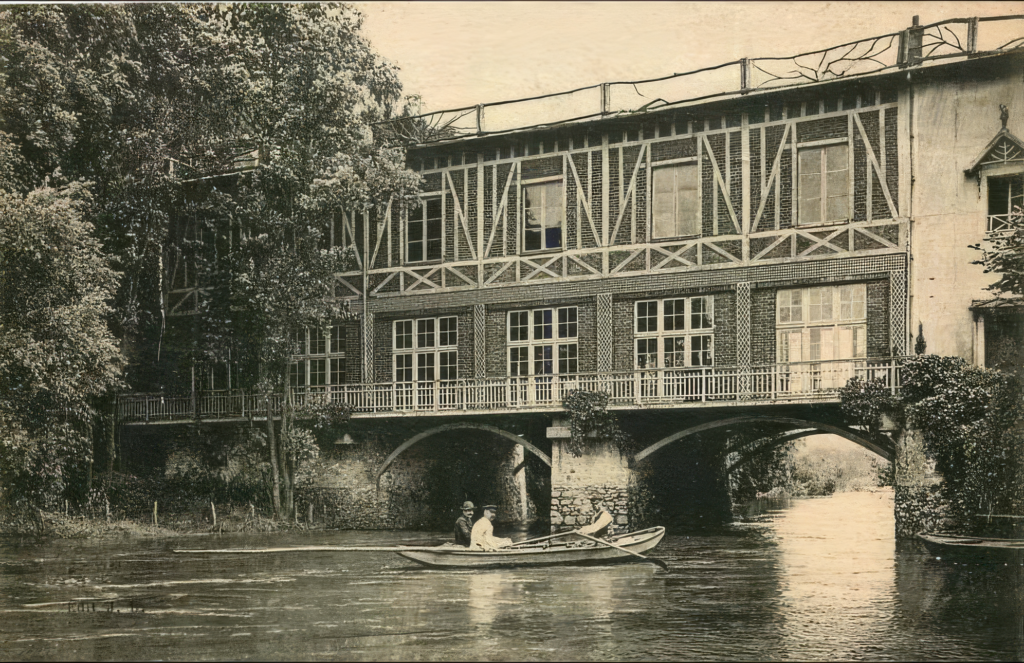
16th – 17th century
Un lieu de légendes
On raconte qu’Henri IV aurait fait construire ce moulin en hommage à une belle meunière, et qu’il serait venu y chasser. Le ruisseau voisin portait d’ailleurs le nom de « Fontaine du Roi ».
Nothing today formally confirms this story, but this legend continues to inhabit the place. It inspired the name of the Henri IV bar, now located on the upper floor of the Mill.
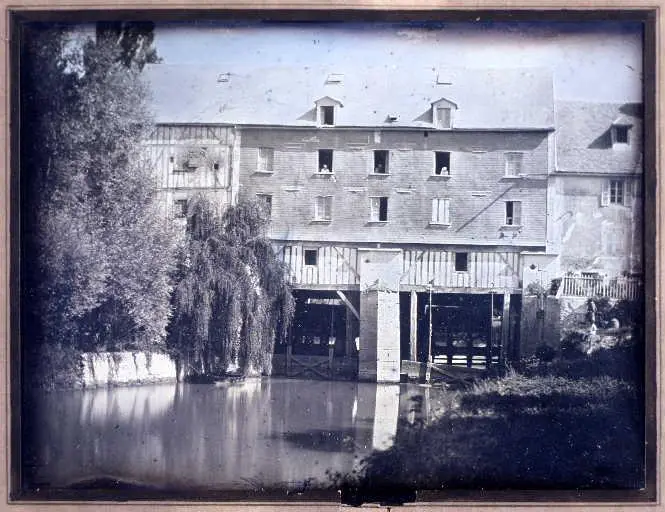
Late 19th century (circa 1870–1900)
Un site industriel en mutation
Après son activité de moulin, le bâtiment connaît une nouvelle vie industrielle. Il devient d’abord une mégisserie (atelier de préparation des peaux), avant qu’un incendie ne mette fin à cette activité.
Un projet d’usine de colorants voit ensuite le jour mais échoue. Le site accueille finalement l’imprimerie de Montévrain, dont le logo représentait, avec une certaine ironie, un moulin à vent.
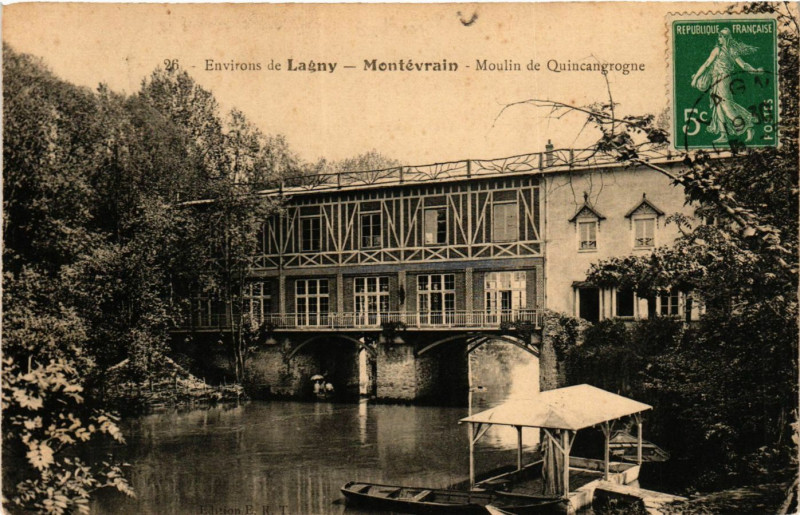
Middle Ages – circa 1865
Un moulin à eau sur la Marne
This was the original activity of the Moulin de Quincangrogne. Like many mills in the Marne valley, it used the force of the current: the closely spaced bridge piers held back the water before accelerating its flow at the outlet. A pertuis, the ancestor of the lock, then allowed boats to pass through.
Pendant plusieurs siècles, le moulin transforme les céréales grâce à l’énergie hydraulique. Son activité meunière cesse vers 1865, avec la mise en service du barrage de Vaires-sur-Marne et les transformations de la navigation sur la Marne.
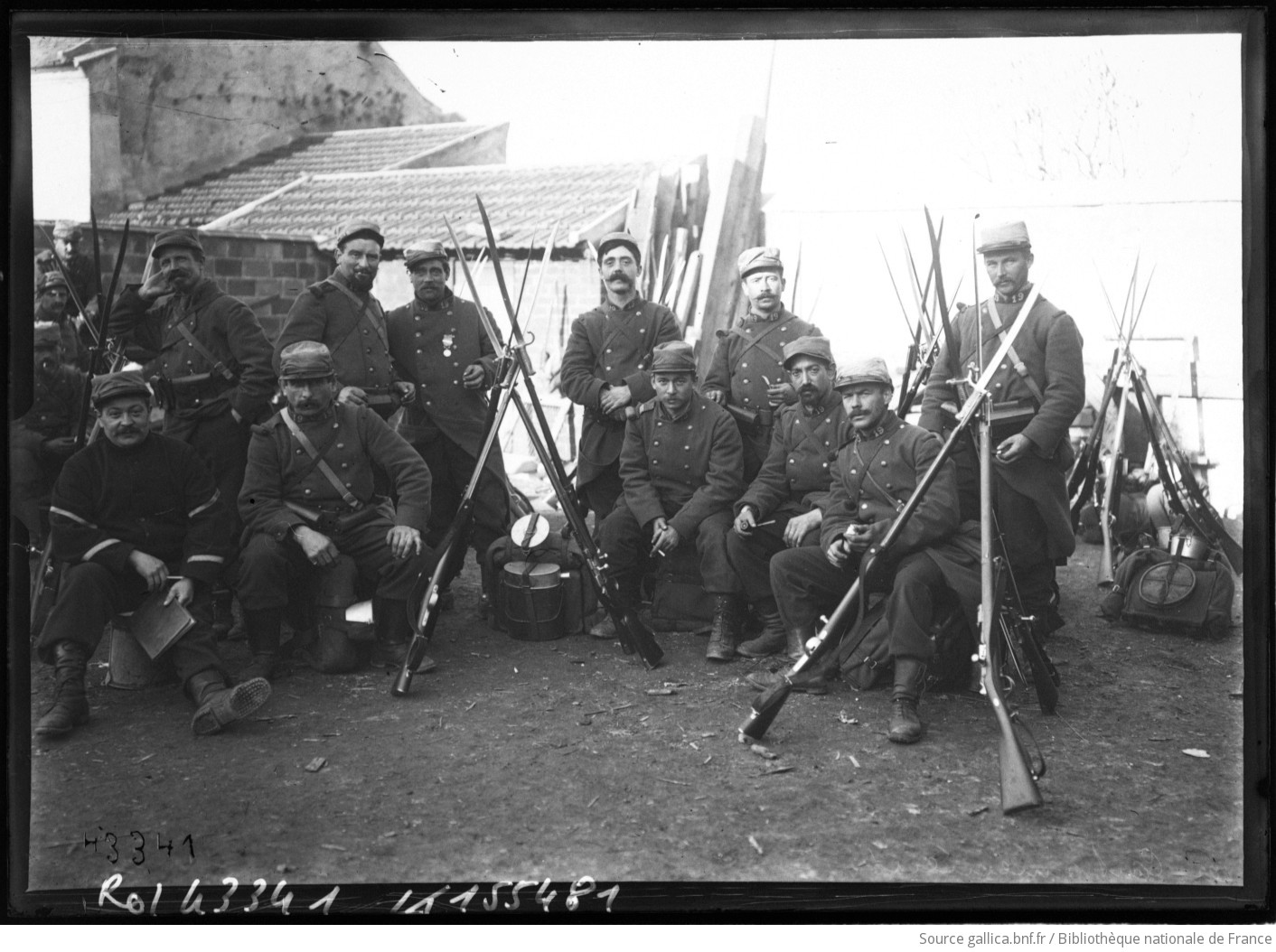
1914 – 1918
Un cantonnement pendant la Grande Guerre
Pendant la Première Guerre mondiale, le Moulin change une nouvelle fois de fonction. Il accueille des soldats français en cantonnement, notamment une batterie du 12e régiment d’artillerie, participant ainsi à l’histoire militaire locale.
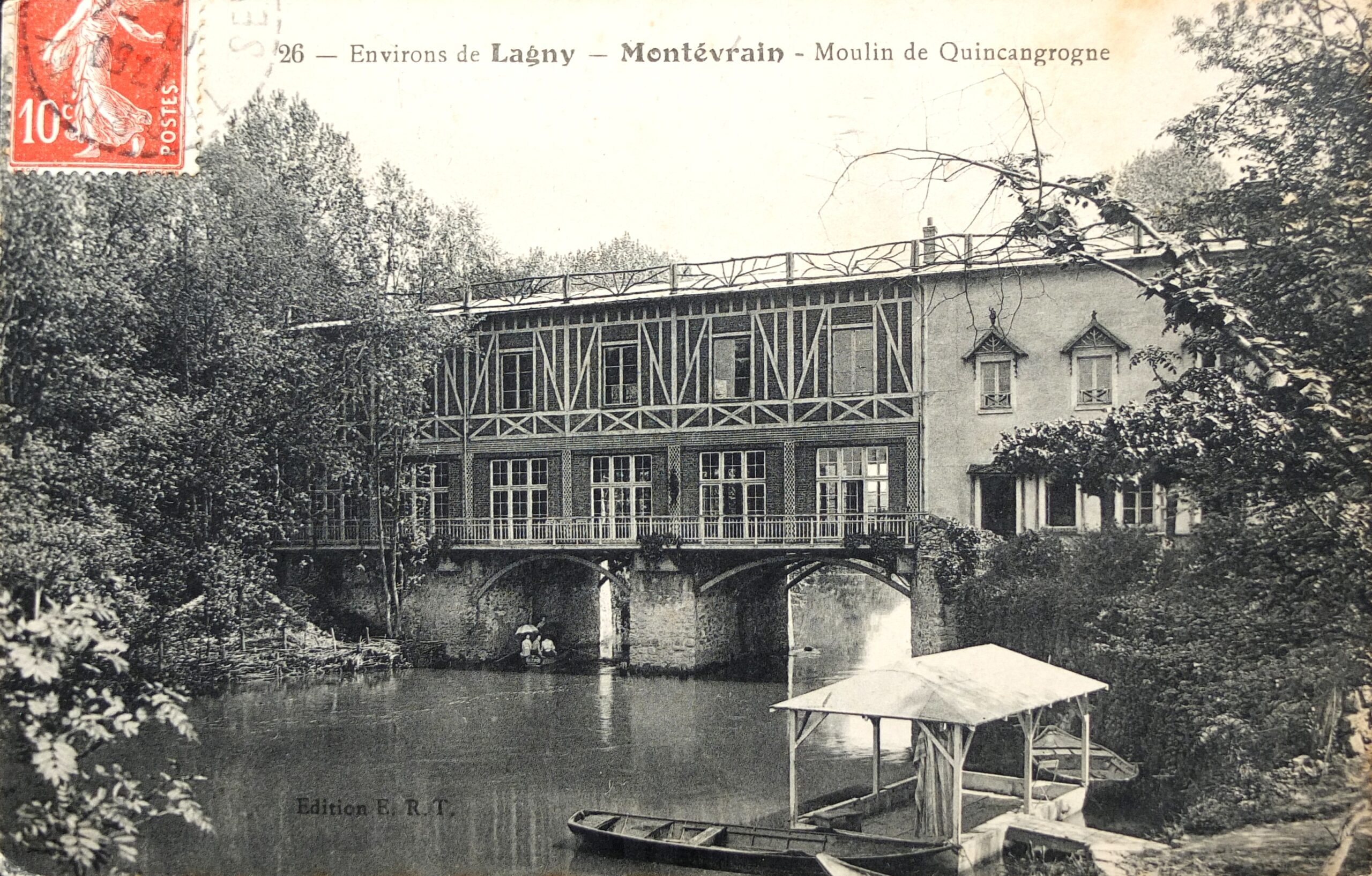
Late 20th century (1970s–2000s)
Un lieu de villégiature
After decades of industrial activity, the Mill entered a new era.
La RATP acquiert le domaine et transforme le site en lieu de vie et de repos pour ses salariés. Le Moulin accueille alors des colonies de vacances, aux côtés d’autres bâtiments remarquables comme la Maison de l’Horloge.
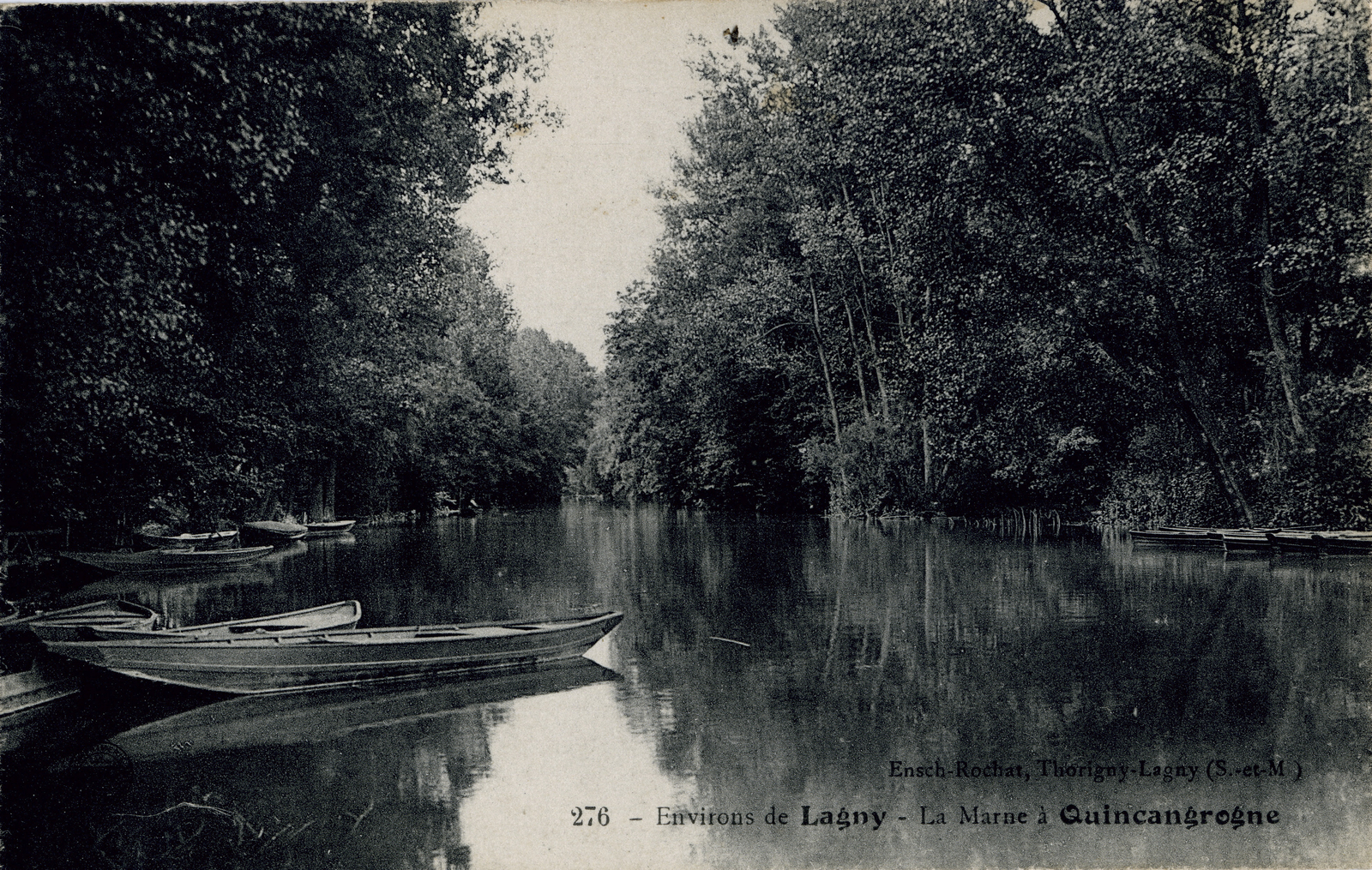
19th – 20th century
Une source d’inspiration pour les artistes
The particular light of the Marne banks and the beauty of the landscape attracted painters and artists.
Le site est alors décrit comme un « véritable jardin d’idéale paresse », un lieu propice à la contemplation et à la création.
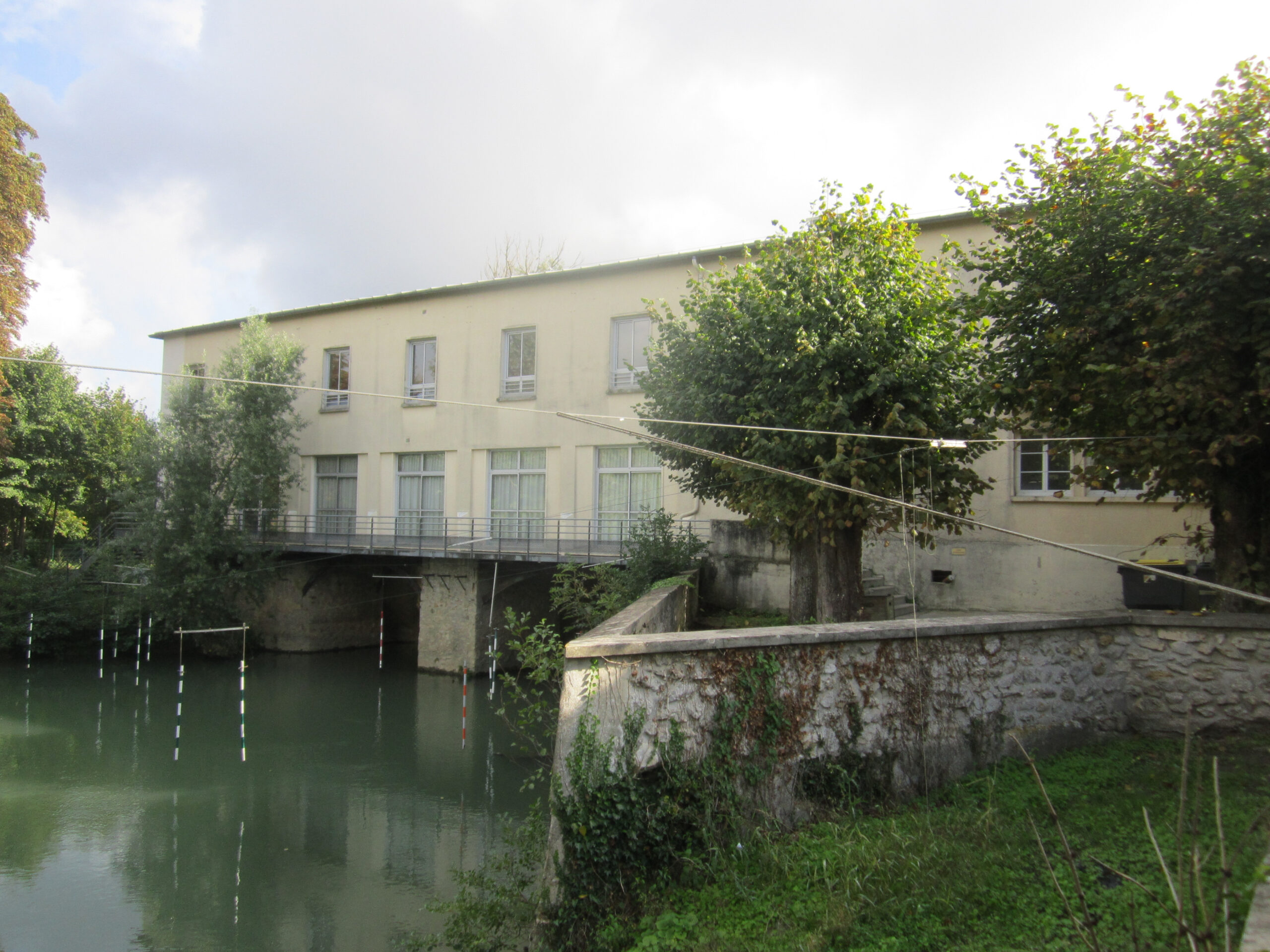
2020
La renaissance du Moulin
In 2020, the RATP sold the estate.
Deux amis d’enfance acquièrent le site et fondent le Groupe Marne & Nature avec une ambition claire : préserver, restaurer et faire revivre ce patrimoine exceptionnel en lui donnant une nouvelle vocation autour de la gastronomie et de l’art de recevoir.
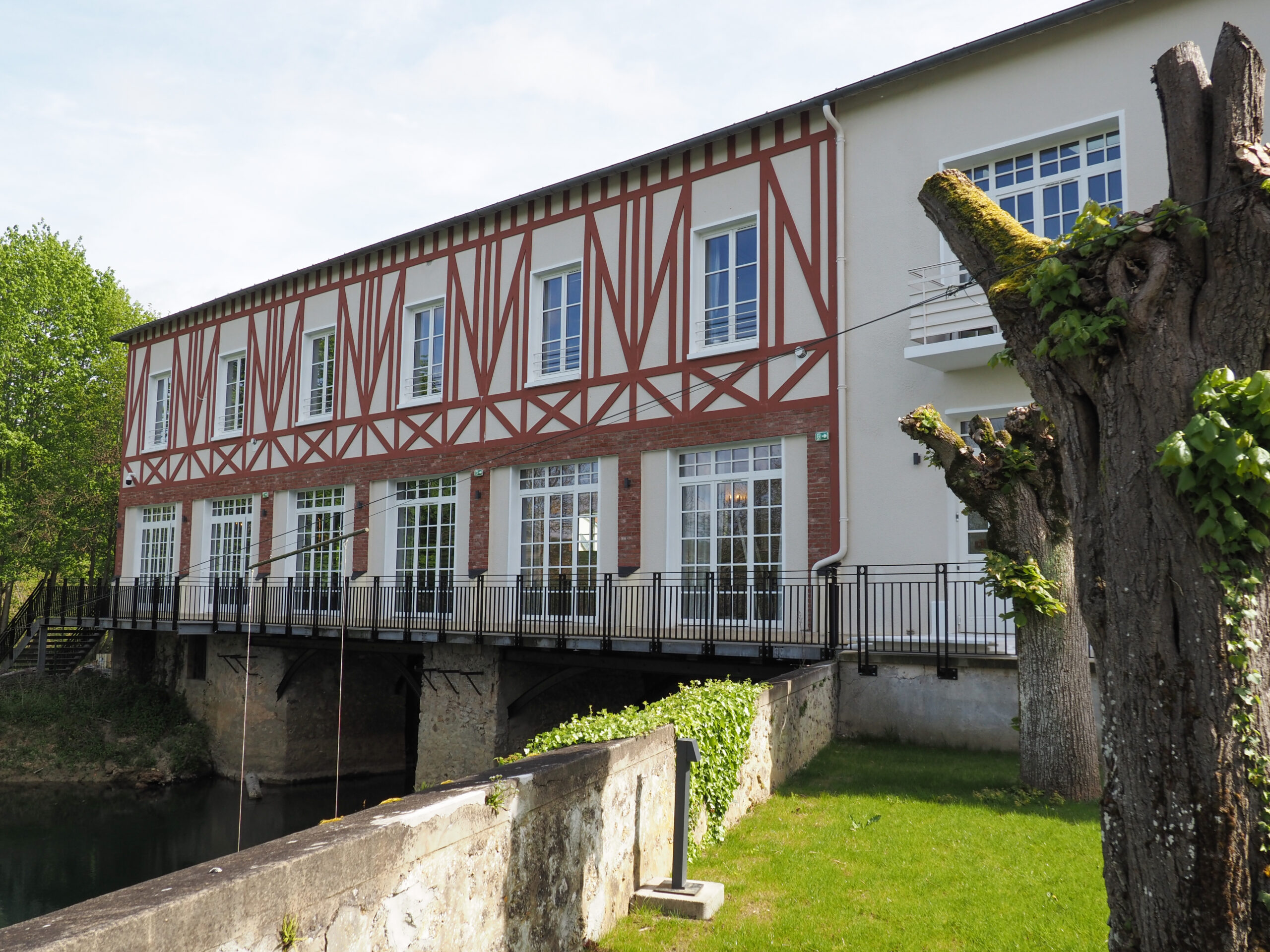
September 2021 – present
Un patrimoine qui reprend vie
The rehabilitation began in September 2021. An extensive restoration project was undertaken to reveal the potential of the place while respecting its history and identity.
Aujourd’hui, le Moulin de Quincangrogne retrouve sa vocation première : un lieu de vie, de partage et d’accueil, où l’histoire ne se contemple pas seulement… elle continue de s’écrire à travers chaque repas, chaque événement et chaque moment passé au bord de l’eau.
Aujourd’hui, un restaurant atypique au bord de la Marne (77)
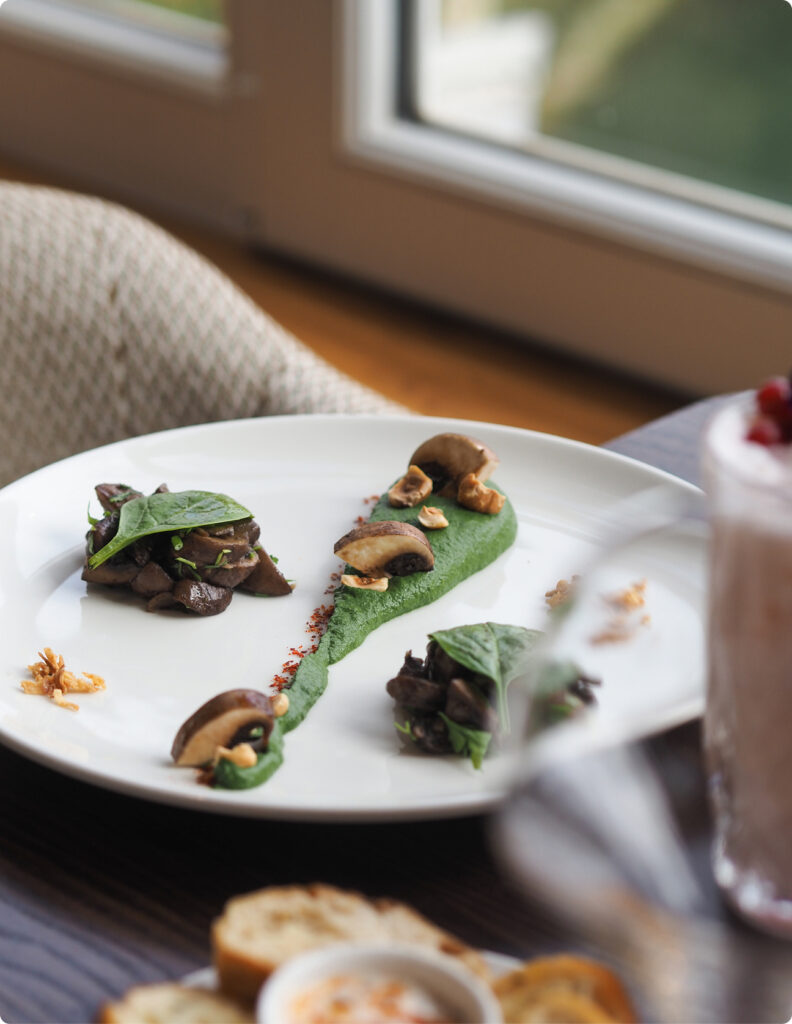
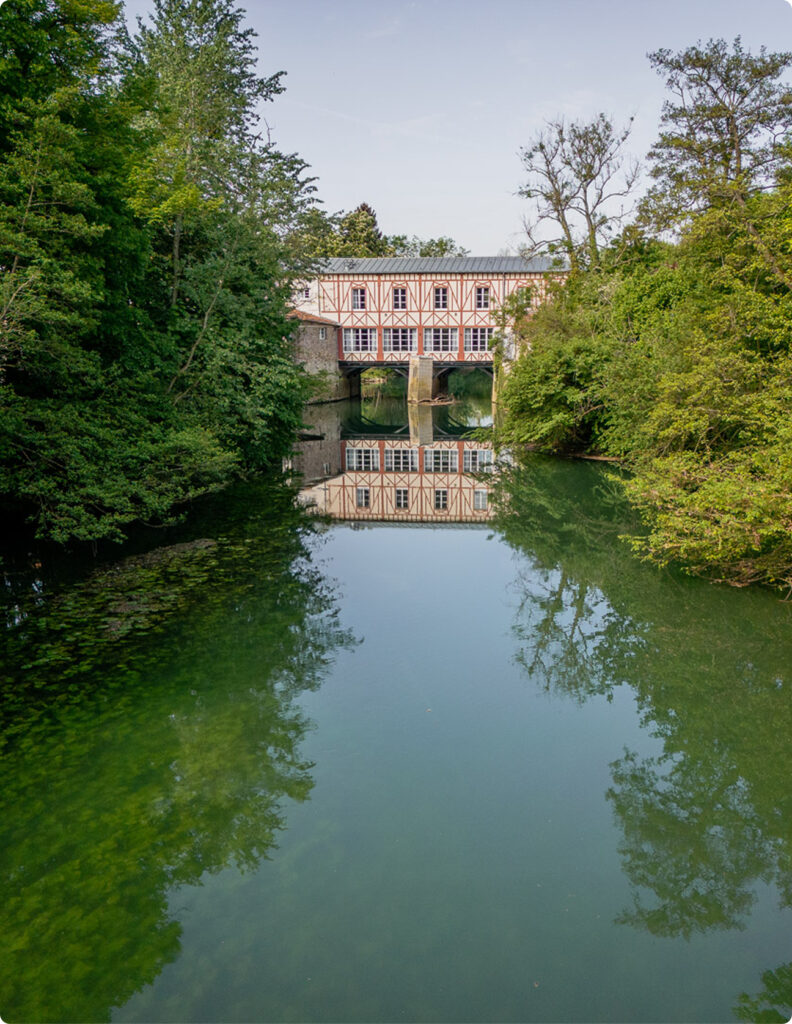
After several years of work, Le Moulin has become a singular address in Seine-et-Marne: a bistronomic restaurant on the banks of the Marne, with a chic and warm atmosphere, where the setting is fully part of the experience.
The cuisine, created by Michelin-starred chef Sébastien Crison, celebrates a creative, refined and seasonal approach. Upstairs, the Henri IV bar extends the experience with bold mixology, in a setting suspended between sky and water.
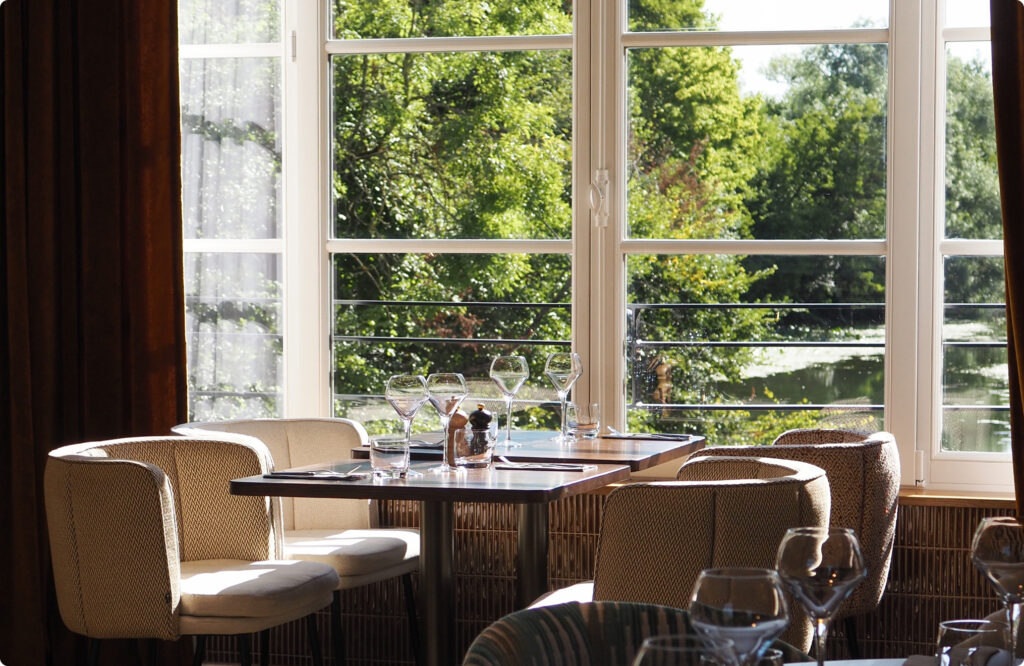
Here, nature invites itself to the table. Large bay windows open the dining room onto the Marne and its verdant islands. The terrace, positioned as close as possible to the water, invites you to enjoy the landscape, especially when the evening light reflects on the river.
Practical information
Opening hours
Le chef et son équipe vous accueillent tous les jours pour un moment gourmand de 12h à 14h et de 19h à 22h.
Le bar à coktail L’Henri IV vous reçoit du mardi au samedi soir pour un afterwork, un apéritif ou une soirée conviviale autour de nos cocktails et de notre sélection de spiritueux, de 17h à minuit.
Reservations
Réservation recommandée sur ZenChef, par téléphone au 01 70 61 07 36 ou par e-mail à lemoulin@marne-nature.com.
Access
Chemin de Quincangrogne à Montévrain (77144)
Just 25 km from Paris and 10 minutes from Disneyland® Paris. Free parking available. Establishment fully accessible to people with reduced mobility.


